
Electronic Services & Repairs

Our electronic services and repairs generally involves the following stages:
- Inspection
- Diagnosis
- Breakdown / On-site troubleshooting
- Procurement or sale of components
- Repairs
- Refurbishment of devices/units
- Maintenance
- System integration
- Upgrades or AIoT modernization
- Process automation
- Installation
Industrial electronics are a valuable asset in the manufacturing sector. They allow for greater precision and can automate much of the production process. Certain electronics can even assist with or monitor other devices.
However, their very complexity and precision can also make them difficult to repair. When electronics experience malfunctions or breakdowns, determining the best course of action can be challenging.
We offer comprehensive repair and technical support for a wide range of electronic systems across all sectors. Our services include, but are not limited to:
- Machine memory and code errors
- Inverters and batteries
- PLCs, HMIs, VSIs, VSDs, PCBs, Sensors, etc.
- Electronics for electric cars, including chargers and stations
- Medical electronics
- Electronics for production lines
- Household appliances and computing devices
- After-sales technical support and global brand representation
We provide both short-term and long-term contracts tailored to your specific needs. If you don’t see your issue on the list, please contact us for a non-binding consultation. We are ready to assist with your repair needs!
Industrial Electronic Repairs
Industrial electronic repairs often involve fixing various components and systems used in industrial automation.
Types of units below:
PLC (Programmable Logic Controller) repairs are crucial for automation processes:
- Fixing or replacing faulty PLCs.
HMI (Human-Machine Interface) repairs ensure operator scan interact effectively with machinery:
- Repairing or replacing HMI screens and components.
Servo Motor repairs control the speed of motors in industrial applications:
- Repairs may involve fixing encoders, resolvers, or other internal components.
Variable Speed Drive (VSD) repairs control the speed of motors in industrial applications:
- Repairs can include fixing control boards, power supplies, and other electronic components.
PCB (Printed Circuit Board) repairs are vital for the operation of many industrial electronic devices:
- Replacing or repairing damaged PCBs

Breakdown / on-site troubleshooting
Breakdowns in industrial electronic units can occur due to various reasons, including electrical faults, mechanical wear, and software issues.
Such as:
- Unexpected Shutdowns: Sudden and unexplained halts in operation.
- Error Codes: Display of error messages or codes on control panels.
- Performance Degradation: Reduced efficiency or accuracy in operations
- Physical Damage: Visible signs of wear, overheating, or damage to components.
On-site troubleshooting
involves diagnosing and fixing issues directly at the location where the equipment is installed.
On-site troubleshooting
involves diagnosing and fixing issues directly at the equipment installation location.
Including an initial assessment,
running diagnostic tests, and testing the system to ensure proper functioning and safety.
Tools
like multi meters, oscilloscopes, and wire tracers are commonly used.

Upgrades / System integration / Industrial Process Automation
Upgrading industrial systems involves enhancing existing equipment and software to improve efficiency, productivity, and safety.
Such as:
- Enhancing Programmable Logic Controllers for better control and efficiency.
- Improving Human-Machine Interfaces for intuitive user interactions and real-time monitoring.
System integration involves connecting various subsystems or components to function as a whole. Such as:
- Increased Efficiency – Streamlining processes and reducing cycle times.
- Scalability -Adapting systems to changing industry demands and emerging technologies.
Industrial process automation uses control systems and technologies to operate machinery and processes with minimal human intervention.

AIoT modernization with sensors (ARTIFICIAL INTELLIGENCE OF THINGS)
AIoT is the integration of Artificial Intelligence (AI) capabilities into Internet of Things (IoT) devices and systems. AIoT combines the power of AI algorithms with the connectivity and data collection capabilities of IoT devices to create intelligent and autonomous systems.
IoT is a concept where everyday physical objects are connected to the internet and can communicate with each other. These objects, often equipped with sensors and software, can collect and share data, enabling them to be monitored and controlled remotely.
At MekaIES, we know the necessity of sensors and the four main IoT sensor value chains (hardware, connectivity platforms, software, and solution providers). We can implement them in many sectors, such as smart cities, buildings, home, office, industry, manufacturing, agriculture, security, and supply chains, to give your business a boost.
At MekaIES we:
- Design and implement AIoT systems and devices for smart homes, offices, cities, and industries.
- Procure components and devices, install and test the entire system.
- Upgrade industrial machines with new Technologies : AIoT Connectivity, AIoT Device Management, Intelligent Motor Control Center (IMCC), etc.


Electric vehicles diagnostics (EVs) & repair of electronic devices
The market for electric vehicles in Africa is experiencing a growing trend, driven by increasing use and support from the governments. However, there are significant challenges related to costs, affordability, reliability, maintenance and repair, lack of trained electronics technicians and qualified mechanics, limited supply chain for spare parts and batteries, limited charging infrastructure, unreliable power grids, and the lack of a continent-wide standard for charging plugs. The import of used electric vehicles raises concerns about their long-term reliability and the need for proper maintenance and diagnostics.
Diagnosing and repairing EVs electronic devices in general, involves a systematic approach, starting with identifying the problem and then utilizing diagnostic tools and techniques to pinpoint the root cause and implement the appropriate repair. Our technician use VCI (Vehicle Communication Interface) and ECU (Engine Control Unit) programmer or flashing tools. ECU programmers are used for modifying engine performance, and VCI devices are used to communicate with the vehicle’s electronic control units, diagnostics, programming, and firmware updates.


MekaIES, as a creator and facilitator of sustainable solutions, offers various affordable solutions to raise incentives for purchasing more EVs in the African countries we operate in. This strategy aims to speed up the paradigm shift and move away from fossil fuel vehicles that contribute to global warming.
At MekaIES we do:
EVs Diagnostics:
- Initial Assessment: Observation of the the vehicle’s behavior and noting any error messages or unusual symptoms.
- Diagnostic Tools: Using of specialized EV diagnostic tools, such as VCI tools or diagnostic and ECU flashing tools, to read error codes and identify faulty components.
- ECU Flashing: If the problem is software-related, ECU flashing is used to update or correct the software, allowing the engine parameters adjustments for performance or efficiency.
- High-Voltage Systems: For high-voltage systems, we utilize multimeters, oscilloscopes, and thermal imaging cameras to identify potential issues like battery failures, loose connections, or insulation breakdown.
- Component Testing: Testing of individual components, such as sensors and actuators, to determine if they are functioning correctly.
- Documentation: Thoroughly documentation of the diagnostic process and findings, including any error codes and test results.


- Identification of the Problem: We start by carefully observing the device’s behavior and symptoms.
- Troubleshooting: We use a combination of methods, and symptom analysis, including visual inspection, electrical tests with multimeter or oscilloscope, and symptom analysis, to narrow down the possible causes.
- Visual Inspection: We look for obvious signs of damage, such as burnt components, cracked boards, or loose connections.’
- Electrical Tests: We use a multimeter to measure voltage, current, and resistance, and use an oscilloscope to analyze signal waveforms.
- Component Testing: We test individual components to determine if they are functioning correctly.
- Repair or Replacement: Once the problem is identified, we either repair the component or replace it.
- Testing: After the repair, we thoroughly test the device to ensure that the problem is resolved.
- Documentation: We document the repair process and any parts replaced or repaired.
Medical electronics equipment maintenance, upgrade & repair
Africa faces challenges such as limited financial resources, infrastructure constraints, and a high need for sustainable healthcare solutions. Our service packages are vital and contribute to patient safety, quality of care, and cost-effectiveness in healthcare.
Medical equipment maintenance, upgrades, and repairs are crucial for ensuring patient safety and the reliability of healthcare facilities. These services encompass a range of activities, including preventive maintenance, corrective repairs, and software/hardware upgrades, tailored to the specific needs of hospitals, clinics, and other healthcare institutions.
Benefits of Medical Equipment Maintenance, Upgrades, and Repairs:
- Patient Safety: Ensuring equipment is functioning correctly and reliably is paramount for patient safety and accurate diagnosis and treatment.
- Cost Savings: Preventive maintenance can reduce the need for costly repairs and replacements, leading to long-term cost savings.
- Increased Efficiency: Well-maintained equipment operates more efficiently, allowing healthcare providers to deliver better care and reduce downtime.
- Compliance: Adhering to regulatory requirements for medical equipment maintenance is crucial for maintaining accreditation and avoiding penalties.
At MekaIES we do:
Maintenance:
- Preventive Maintenance: Regular inspections, cleaning, and servicing to prevent equipment breakdowns and ensure proper functionality. This may involve testing, lubricating, adjusting, and cleaning various components.
- Software/Firmware Updates: Keeping software and firmware up to date is essential for addressing security vulnerabilities, improving performance, and ensuring compatibility with other systems.
- Monitoring: Continuously monitoring the performance and operating conditions of medical equipment is vital for identifying potential issues early on.


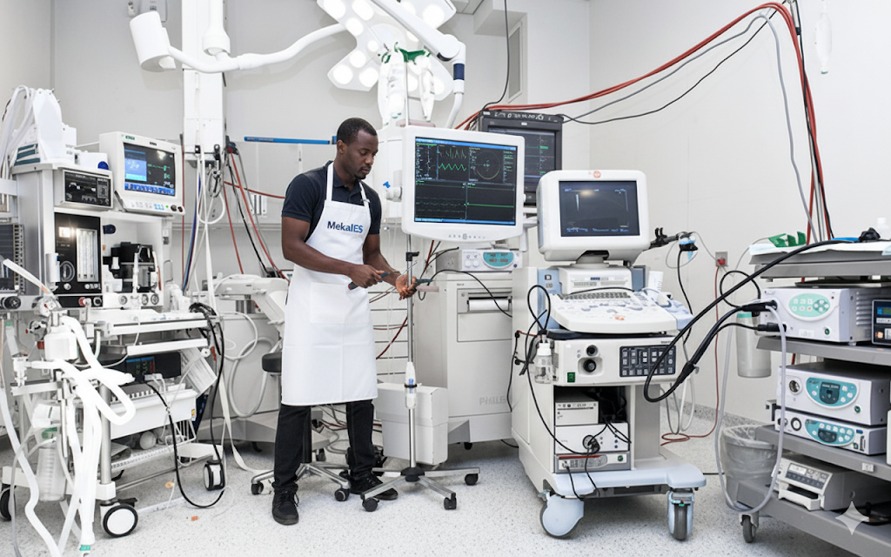
- Hardware Upgrades: Replacing outdated components with newer, more efficient parts can improve performance and longevity.
- Software Upgrades: Updating software to the latest versions ensures access to new features, improved security, and better compatibility with other software.
- AIoT modernization: Analysis of the feasibility and integration of new technology into existing equipment provides long-term economies and increases the value of the provided services.
- Corrective Repairs: Addressing breakdowns and restoring full functionality when equipment malfunctions.
- Refurbishing: Restoring used medical devices to a functional and safe condition, often involving replacing components or rebuilding parts.
- Original Equipment Manufacturer (OEM) Support: Working with the manufacturer for repairs and upgrades can provide access to specialized expertise and original spare parts.
Production line maintenance, upgrade & repair
Maintaining, upgrading, and repairing production lines is crucial in Africa for boosting manufacturing competitiveness, driving economic growth, and ensuring sustainable development. It helps to maximize production efficiency, minimize downtime, reduce costs, and enhance the quality of goods produced, contributing to the continent’s industrialization efforts. Preventive maintenance reduce the need for expensive repairs and replacements, lowering overall operating costs. Well-maintained equipment ensures that products are manufactured to the highest standards, enhancing product quality and customer satisfaction. This is especially important in Africa, where quality control is often a challenge for local manufacturers. Reliable equipment ensures consistent and uninterrupted production, which is crucial for meeting customer demands and maintaining business continuity. Routine maintenance helps identify and address potential safety hazards before they cause accidents, protecting workers and reducing workplace risks. This is particularly important in African manufacturing environments, where safety standards may not always be strictly adhered to. Extending the lifespan of equipment through proper maintenance and upgrades reduces the need for frequent replacements, contributing to environmental sustainability
Production line maintenance encompasses various aspects, including regular upkeep, upgrades to enhance efficiency, and corrective measures to address breakdowns. Although production lines vary depending on each customer’s purpose, MekaIES has developed general guidelines to ensure the reliability of tender offers and proceeds as follows:
- Standardized Operating Procedures (SOPs): Using checklists and manufacturer guidelines for routine inspections.
- Training and Skill Development: Ensuring maintenance personnel are well-trained on current techniques and technologies.
- CMMS (Computerized Maintenance Management System): Using software to manage maintenance activities, track work history, and schedule tasks.
- Root Cause Analysis: Investigating the underlying causes of failures to prevent recurrence.
- Continuous Improvement: Regularly reviewing maintenance practices and identifying areas for improvement.
- Key Performance Indicators (KPIs): Tracking metrics like equipment uptime, mean time between failures (MTBF), and mean time to repair (MTTR) to measure maintenance effectiveness.


At MekaIES we do:
Maintenance:
- Preventive Maintenance: Regularly scheduled maintenance activities to prevent breakdowns and ensure equipment operates at peak capacity.
- Corrective Maintenance: Addressing breakdowns and faults as they occur to restore normal operation quickly.
- Predictive Maintenance: Using tools like vibration analysis and thermal imaging to monitor equipment condition and predict potential failures, allowing for proactive maintenance.
- Optimizing Performance: Enhancing production line efficiency, capacity, and reliability through upgrades.
- Modernizing Technology: Integrating new technologies and systems, such as AIoT to improve automation, data collection, and control.
- Adapting to Changes: Making adjustments on the production lines to accommodate changes in product requirements, market demands, and regulatory standards.
- Fault Diagnosis: Identifying the root cause of a malfunction through detailed analysis.
- Component Replacement: Replacing damaged parts or worn-out equipment to restore functionality.
- System Modifications: Making changes to systems and processes to prevent future occurrences of the same fault.
Household appliances & computing devices diagnostics, repair, and upgrade (Bulk-contract only)
Household appliances and computing devices represent a major e-waste challenge in Africa.
Tackling the E-Waste Challenge
Repairing household appliances and computing devices often takes longer than working on industrial machines. The presence of very small electronic components makes diagnosis and repair complex, and in many developed nations, the cost of repair often matches or exceeds the price of a new product — a consequence of planned obsolescence.
As a result, Africa is increasingly becoming a dumping ground for electronic waste (e-waste) from industrialized countries. Although the continent has the lowest annual e-waste production per capita, UN agencies project growth rates of 3–5% annually, driven by the rising integration of technology.
Limited formal recycling infrastructure, reliance on informal recycling practices (such as open burning and crude dismantling), and illegal dumping release toxic substances like lead and mercury. This unregulated handling poses serious risks to community health, pollutes soil and water, and blocks the development of sustainable e-waste management systems.
MekaIES: Sustainable Solutions for Global Brands
To address the mentioned issues, MekaIES offers technical after-sales support to international brands manufacturers and suppliers of household appliances and computing devices. We ensure that customers receive secure, reliable, and sustainable products.
Win-Win Partnerships
With a vision for mutually beneficial collaboration, MekaIES offers sellers, retailers, manufacturers, and insurance companies a bulk pricing deals with flexible service contracts to promote repair and refurbishment. Individual customers are not excluded but should be aware that the hour-based pricing system may increase the repair cost.
- Subscription Model: Companies can subscribe for a minimum of 150 hours per year of technical services (diagnosis or repair), covering any number of appliances.
- Beyond Subscription: Once the included hours are used, additional services are billed by the hour.
At MekaIES we do:
Maintenance:
- Preventive Maintenance: Regular inspections, cleaning, and servicing to prevent equipment breakdowns and ensure proper functionality. This may involve testing, lubricating, adjusting, and cleaning various components.
- Software/Firmware Updates: Keeping software and firmware up to date is essential for addressing security vulnerabilities, improving performance, and ensuring compatibility with other systems.
- Monitoring: Continuously monitoring the performance and operating conditions of medical equipment is vital for identifying potential issues early on.



At MekaIES we do:
After-sales technical support & representation for global brands: This enhances customer satisfaction, builds trust, and facilitates efficient after-sales service.
- Fault Diagnosis: Identifying the root cause of a malfunction through detailed analysis.
- Component Replacement: Replacing damaged parts or worn-out equipment to restore functionality.
- System Modifications: Making changes to systems and processes to prevent future occurrences of the same fault.
- Refurbishment: We dismantle unrepairable devices and restore devices with minor damage to reduce e-waste.
- E-waste disposal: For devices that cannot be repaired or refurbished, MekaIES guarantees safe and responsible disposal.
- Optimizing Performance: Enhancing efficiency, capacity, and reliability through upgrades.
- Modernizing Technology: Integrating new technologies and systems, such as AIoT to improve automation, data collection, and control.
- Adapting to Changes: Adjusting accommodate changes in product requirements, market demands, and regulatory standards.
After-sales technical support & Global brands representation (Bulk-contract only)
After-sales Technical support and representation of international brands manufacturers and suppliers:
Having a local technical support representative is crucial for electronic devices manufacturers and suppliers as it enhances customer satisfaction, builds trust, and facilitates efficient after-sales service. This local presence enables faster response times to issues, easier access to parts, and personalized support tailored to the specific needs of the local market. In addition, the presence of local technical support limits electronic waste (e-waste) on the African continent. Our approach also helps global brands align with the UN’s Sustainable Development Goals (SDGs), while boosting Corporate Social Responsibility (CSR) and Environmental, Social, and Governance (ESG) performance.
Why be represented by MekaIES:
Enhanced Customer Experience: Local reps offer immediate assistance, troubleshoot problems, and guide customers through repairs, reducing frustration and improving overall satisfaction.
Building Trust and Loyalty: Local support demonstrates a commitment to the customer and builds confidence in the brand, potentially leading to repeat business and positive word-of-mouth.
Facilitating Efficient After-Sales Service: Local reps quickly access parts, schedule service appointments, and handle warranty claims, streamline the process and minimize downtime for customers.
Local Expertise: Local representatives understand local cultural preferences, language nuances, and specific technical needs, providing more relevant and effective support.
Cost-Effective Solutions: While the initial investment in a local support team may seem high, it can be a cost-effective solution in the long run, as it reduce the need for costly international travel and expedite repairs.
Competitive Advantage: Offering local support differentiates a manufacturer from competitors, creating a competitive advantage in a market where customer experience is increasingly important.
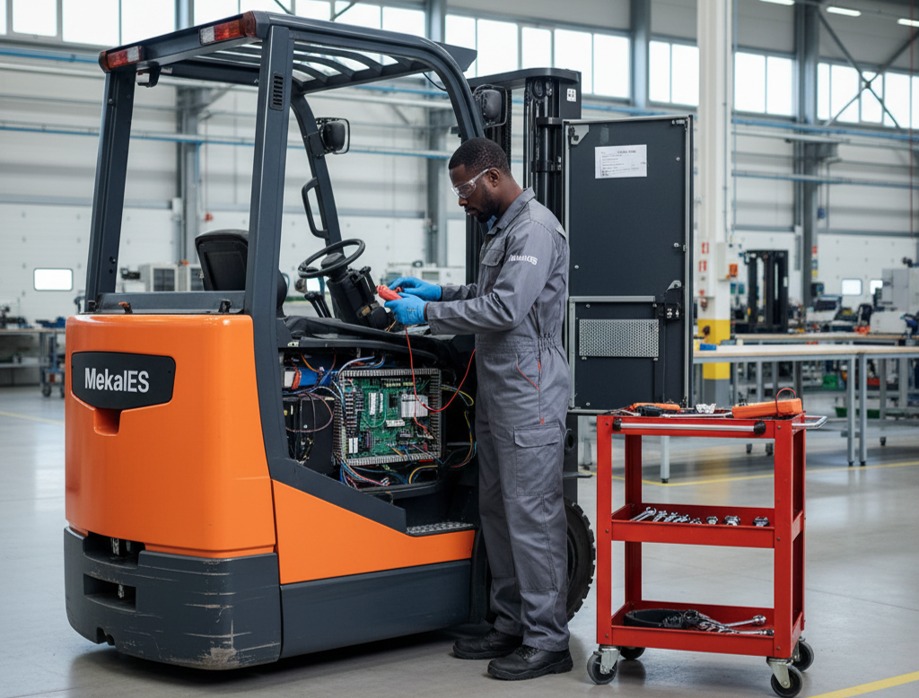


At MekaIES, we provide comprehensive after-sales support for a vast range of electronics and machinery. Our certified technicians are experts in servicing everything from complex industrial equipment like CNC machines, generators, pumps, printers, scanners, and forklifts – to specialized textile machinery such as sewing, embroidery and serger machines. We also handle electronics for electric cars, essential computing and household devices.
As a trusted partner for global brands, we guarantee expert care and genuine parts for all your systems, ensuring every piece of equipment functions perfectly, giving you the peace of mind you deserve.
Why bulk-contract:
With a MekaIES bulk contract, manufacturers, retailers, and insurers gain a trusted partner for sustainable repair solutions. Because complex devices with tiny electronic components take time to diagnose and repair, costs sometimes exceed the price of new products under the usual hour-based pricing model. Our subscription offers a minimum of 150 hours per year for any number of appliances, with additional time billed by the hour—making repairs more affordable, reducing e-waste, and supporting both customer satisfaction and sustainability.